Kabukicho Bon Odori & the Culture of Obon — What the Mid-August Festival Means, and Where to Spend the Night After (2026 Guide)
Kabukicho Bon Odori & the Culture of Obon: A 2026 Guide for International Visitors
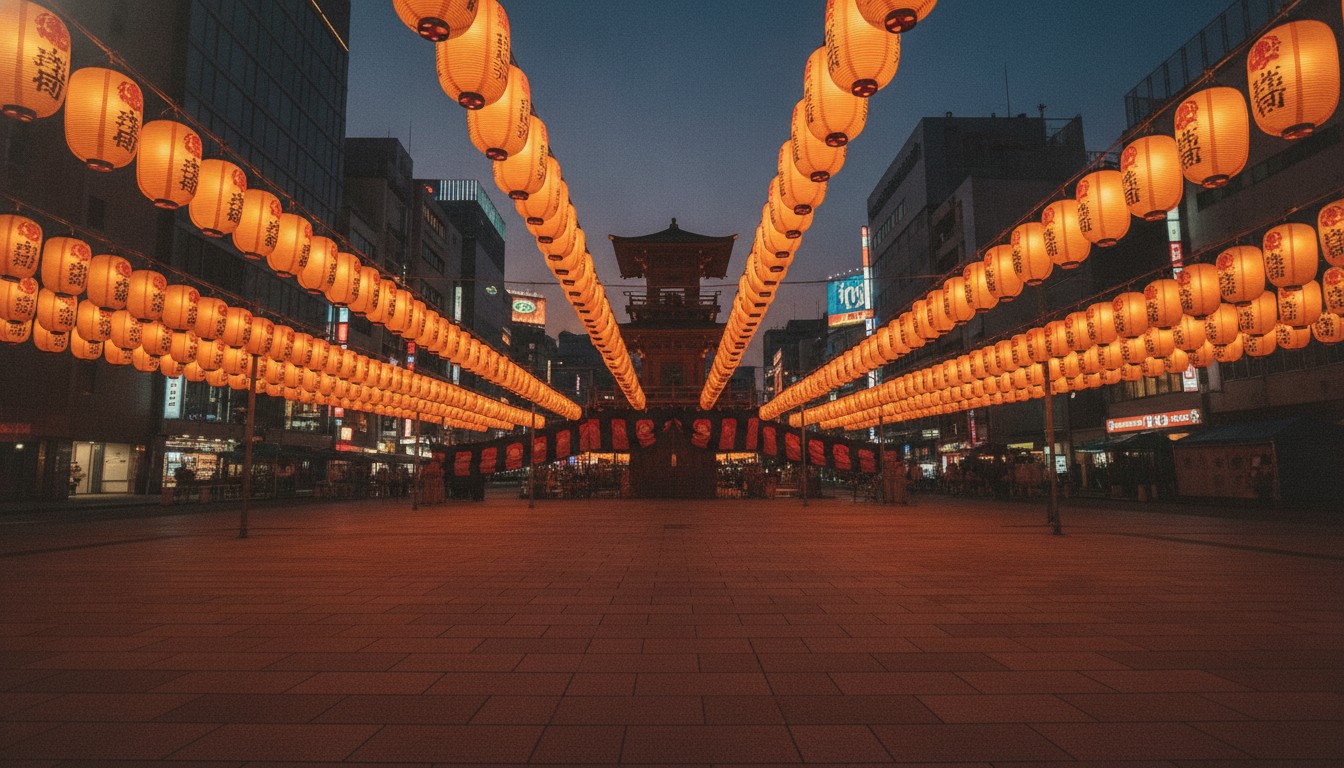
For most of the year, Kabukicho is Tokyo's loudest, brightest, most restless district. But for two nights in mid-August, a wooden tower goes up in the middle of Cine City Plaza, lanterns come on, drums start, and hundreds of people — grandmothers, office workers, children, tourists who wandered in by accident — form slow concentric circles and dance. This is Bon Odori, and in 2026 the Kabukicho edition runs on Friday, August 14 and Saturday, August 15 at Cine City Plaza (シネシティ広場), the open square right beside the Tokyu Kabukicho Tower and the famous Godzilla head.
It is free, it welcomes every age and nationality, and it is one of the most quietly moving things you can experience in Tokyo in summer. But to enjoy it fully, it helps to understand what it actually is — because Bon Odori is not just a street party. It sits at the center of Obon, one of the most meaningful weeks in the Japanese calendar. If you're planning your first premium night out in the city, our complete Shinjuku nightlife guide for foreigners pairs well with this piece; here, let's start with the festival and the culture behind it.
What is Obon, really?
Obon (お盆) is the Japanese Buddhist observance, held around mid-August, when the spirits of one's ancestors are believed to return home to visit the living. It is not somber in the Western funeral sense. It is closer to a warm family reunion that happens to include the people who came before you. Families clean and decorate graves, light small welcoming fires called mukaebi, set out offerings, and — at the end of the period — light okuribi farewell fires to send the spirits gently back.
In 2026, the core Obon days fall across August 13 to 16. During this window, a huge portion of the country travels: people return to their hometowns, trains and expressways fill, and Tokyo itself briefly empties of locals even as it fills with visitors. Understanding this rhythm is genuinely useful for planning, and we'll come back to it below.
The dancing part — Bon Odori — grew out of Nembutsu Odori, a centuries-old folk practice of dancing to welcome and console the returning spirits. Over time it became the community celebration you see today: a yagura (the raised wooden tower) at the center, taiko drummers on top, and everyone circling around in a simple, repeating step that anyone can pick up within a song or two. You do not need to know the dance. You do not need a yukata. You just join the circle behind someone who looks like they know what they're doing, and copy them. That openness is the whole point.
Why Kabukicho's Bon Odori is special
Every neighborhood in Japan holds its own Bon Odori, but Kabukicho's has a particular flavor. This is Tokyo's entertainment heart, so the festival mixes the deeply traditional with the unmistakably modern. Alongside the classic drum-and-circle dancing, the 2026 program adds a "Bon DANCE" set where the crowd moves to pop music, live wadaiko (Japanese taiko) performances, and special guest stages. In 2026 it expands to two full evenings for the first time — Friday from around 17:00 and Saturday from around 17:30 — a sign of how popular it's become with both locals and international visitors. (Times can shift year to year, so confirm on the day.)
There's something quietly perfect about it. The most notorious nightlife district in Japan pauses, sets down a wooden tower where the neon usually rules, and invites everyone — regardless of language or nationality — to dance together in a circle. If you want a single image that captures why so many travelers fall for Tokyo, this is it.
How to enjoy Bon Odori respectfully as a visitor
Bon Odori is welcoming by design, but a little awareness goes a long way. A few gentle guidelines:
Just join in. You genuinely don't need an invitation or any skill. Watch one rotation, fall into the circle, and follow the hands and feet of the dancer in front of you. Mistakes are expected and nobody minds.
Yukata is welcome, not required. Many people wear summer yukata, and rental shops around Shinjuku can set you up if you'd like the full experience. Regular clothes are completely fine too.
Mind the food stalls and the trash. Festival food — yakitori, kakigori shaved ice, takoyaki — is part of the fun. Eat near the stalls, and use the marked bins; keeping the plaza clean is part of the etiquette.
Be present, not just filming. Photos are fine, but the circle is a shared, almost meditative thing. Dance at least a few rounds with your phone in your pocket.
Remember what it's for. Underneath the pop music and the food stalls, Obon is about remembrance and gratitude. You don't have to be Buddhist to hold a little of that spirit while you're there.
Planning around Obon: the travel rhythm that actually matters
Here's the practical part most guides skip. Because Obon (August 13-16 in 2026) is one of Japan's biggest domestic travel periods, when you move around the city changes how pleasant it is. The heaviest return-travel congestion — the famous U-turn rush — peaks on Saturday, August 15, when huge numbers of people head back toward the cities. By contrast, Sunday, August 16 tends to feel noticeably calmer, and the days just before the peak are easier for getting around.
So if you want the best of both worlds — the festival and a relaxed evening — a smart pattern is to enjoy Bon Odori on the 14th or 15th, then keep your late-night plans close to where you're staying in Shinjuku rather than crossing the city. Our summer 2026 Shinjuku nightlife and Obon guide goes deeper on timing the whole week around these crowds.
Where to spend the night after the drums stop
Bon Odori winds down in the evening — and this is where the geography of Kabukicho becomes a gift. Cine City Plaza sits in the middle of Shinjuku's nightlife district, which means that when the festival ends, everything else is a short walk away. After a warm, communal evening under the lanterns, a lot of visitors don't want to end the night; they want to keep the mood going somewhere comfortable.
The trap, especially on a festival night, is the classic Kabukicho one: the streets fill with touts and muryo annaijo ("free guide") stands that funnel unsuspecting tourists into venues with hidden charges. A festival crowd is exactly what they hope for. The single best defense is to decide where you're going before you're standing on the street — we explain the whole mechanism in Muryo-Annaijo vs. Transparent Booking.
If you'd rather step out of the crowd into something calm and predictable, a quiet, foreigner-friendly premium lounge is the natural counterpart to a big communal festival. Where Bon Odori is about being part of the crowd, a lounge is about a small, unhurried conversation with a clear, upfront price. That contrast — noisy communal joy, then quiet transparent hospitality — makes for a genuinely lovely night. If the idea of Japanese hospitality culture interests you, our piece on omotenashi and the premium lounge is a good companion read, and our transparent value experience shows what a fair, all-inclusive evening actually looks like.
A simple festival-night plan
If you want a ready-made shape for the evening, try this. Arrive at Cine City Plaza in the early evening while it's still light; walk the food stalls, grab a drink and something grilled, and let the crowd build. When the drums start, join the circle for a few songs — genuinely, do the dancing. As it winds down, rather than drifting into the tout-heavy alleys, walk to a place you booked earlier in the day: somewhere quiet, transparent, and multilingual where you can sit, cool down, and talk about the night you just had. You'll have touched both sides of Tokyo in a single evening — the ancient communal one and the modern hospitable one — without a single unpleasant surprise.
Ready to plan your festival night?
If a calm, transparent, conversation-first end to the evening sounds right, that's exactly what LUXE Shinjuku is built for — multilingual service, pricing you can see before you arrive, and a 4.8-star reputation from 310+ international guests.
- See the full pricing structure: our pricing page — no surprises at closing time.
- Not sure how it works? Read the how-to-play guide and the FAQ.
- Ready to go? Book your seat online — booking ahead is the safe, legal, no-luck-required way in, and it means you already know where you're headed when the festival ends.
Dance in the circle, then let the night settle somewhere transparent. That's how you do mid-August in Shinjuku.