Omotenashi Explained — What Really Makes a Shinjuku Premium Lounge Culturally Different for Foreign Visitors
Omotenashi Explained — What Really Makes a Shinjuku Premium Lounge Culturally Different
The first time a foreign visitor steps into a proper Shinjuku premium lounge, something feels different — and it's not easy to name. The greeting is warmer than you expected but never fawning. Nobody is angling for a tip. The price you were quoted is the price you pay. The hostess across the table seems genuinely interested in you, not in upselling the next round. It all adds up to a feeling of being looked after that most visitors have simply never experienced back home.
That feeling has a name in Japanese: omotenashi (おもてなし) — often translated as "hospitality," though the word carries far more than that. This post is a piece of cultural education, not a sales pitch. If you're planning a night out in Kabukicho and you want to understand why a premium lounge feels the way it does — and how to be a gracious guest inside that culture — this is the context that makes the whole evening make sense.
What omotenashi actually means (待客之道 / 款待文化)
Omotenashi is one of those Japanese words that resists a clean one-word translation. The closest English gets is "wholehearted hospitality," but even that misses the core idea. Omotenashi is the practice of anticipating a guest's needs and meeting them before they're voiced — quietly, without expectation of reward, and without making the guest feel indebted.
The philosophy runs deep in Japanese culture. It's the reason a shop clerk will walk you to the door, why a ryokan sets out slippers facing the exact direction you'll need them, why a tea ceremony treats a single cup as a once-in-a-lifetime encounter. The host's job is to make the guest feel completely at ease — and the mark of doing it well is that the effort is invisible. You simply feel comfortable, without quite knowing why.
In a premium lounge, omotenashi is the entire operating philosophy. The temperature of the room, the moment your glass is refilled, the way the conversation is kept light when you're tired and lively when you're not — all of it is a form of reading the guest. Understanding this reframes the whole experience: you're not buying drinks, you're being hosted.
The role of the hostess — the human center of omotenashi
At the heart of the premium lounge is the hostess, and this is the part most misunderstood by first-time foreign visitors, so let's be clear and honest about it.
A hostess is a professional conversation host. Her role is to sit with you, pour your drinks, keep the conversation flowing, and make sure you have a genuinely relaxing, enjoyable evening. Think of the finest possible dinner-party companion: attentive, warm, quick to laugh, skilled at drawing out a good story and reading when you'd rather just unwind. That skill — the art of making a stranger feel welcome and at ease — is exactly omotenashi in human form.
This is upscale social hospitality. The value on offer is company, conversation, and the polished comfort of being genuinely well hosted for an evening. A good hostess reads your mood, remembers what you said an hour ago, and makes an unfamiliar city feel, for a couple of hours, like a place where you belong. For a traveller far from home, that warmth is worth a great deal — and it's the reason the premium lounge exists as a distinct category. If you want to see how the different venue types compare, we broke it down in big clubs vs. premium lounges.
Why there is no tipping culture in Japan
Here is one of the sharpest cultural surprises for visitors, especially those from North America: in Japan, you do not tip. Not in restaurants, not in taxis, and not in a premium lounge. Attempting to tip is not only unnecessary — it can create genuine awkwardness.
This isn't stinginess or a lack of appreciation. It flows directly from omotenashi. The Japanese view is that excellent service is the standard, not an extra to be purchased with a gratuity. The service you receive is already complete; it is a matter of professional pride, offered wholeheartedly and without any expectation of a personal reward on top. To tip is, in a subtle way, to suggest the host was working for the money rather than out of genuine care — which cuts against the entire spirit of the thing.
For a foreign guest, this is liberating once you understand it. There's no anxious mental math at the end of the night, no wondering whether 10% or 20% is expected, no fumbling with cash. The price is the price. Your only job is to be a pleasant guest and enjoy yourself. Everything the hostess and staff do for you is included in the culture of the house, not itemised on a tip line.
Why transparent, upfront pricing (明码标价) is itself hospitality
If tipping is one pillar removed, transparent pricing is the pillar that replaces it — and this is where omotenashi and good business quietly become the same thing.
In a genuine premium lounge, the price is stated clearly and upfront: the first-hour package, what it includes, the cost of an extension, any table charge. There are no surprises waiting at the end of the night. This is what transparent, upfront pricing means, and it's worth understanding why it belongs to the hospitality tradition rather than being separate from it.
Think about it from the omotenashi standpoint. The goal is to put the guest completely at ease. A guest who is quietly worried about the bill is not at ease — that anxiety sits under every sip and every conversation, no matter how warm the room. By making the price transparent before you ever sit down, a good venue removes that worry entirely, freeing you to actually enjoy the evening. Clear pricing isn't the opposite of hospitality; it's one of its highest expressions. You can see exactly what this looks like on our transparent pricing page.
This is also precisely what separates a respectable lounge from the street-level traps Kabukicho is unfortunately known for. The venues that hide their pricing, that lure you in with a vague "free guide" and spring a shocking bill later, are violating omotenashi at its root — they're creating anxiety and exploiting it. We wrote a full breakdown of that distinction in muryo-annaijo vs. transparent booking. Transparency, in other words, isn't just about protecting your wallet. It's the honest, respectful version of hospitality — and it's the version worth seeking out.
Etiquette a first-time foreign guest should know
You do not need to be an expert in Japanese customs to be a welcome guest. Omotenashi flows toward you, and no reputable venue expects a visitor to know local etiquette perfectly. That said, a few simple points of grace will make your evening smoother and mark you as a considerate guest — and being a good guest is its own quiet pleasure.
Let the pouring happen. In Japanese drinking culture, people pour for each other rather than for themselves. Your hostess will keep your glass topped up; a nice gesture is to occasionally offer to pour for her in return. It's a small ritual of mutual care, and it's genuinely appreciated.
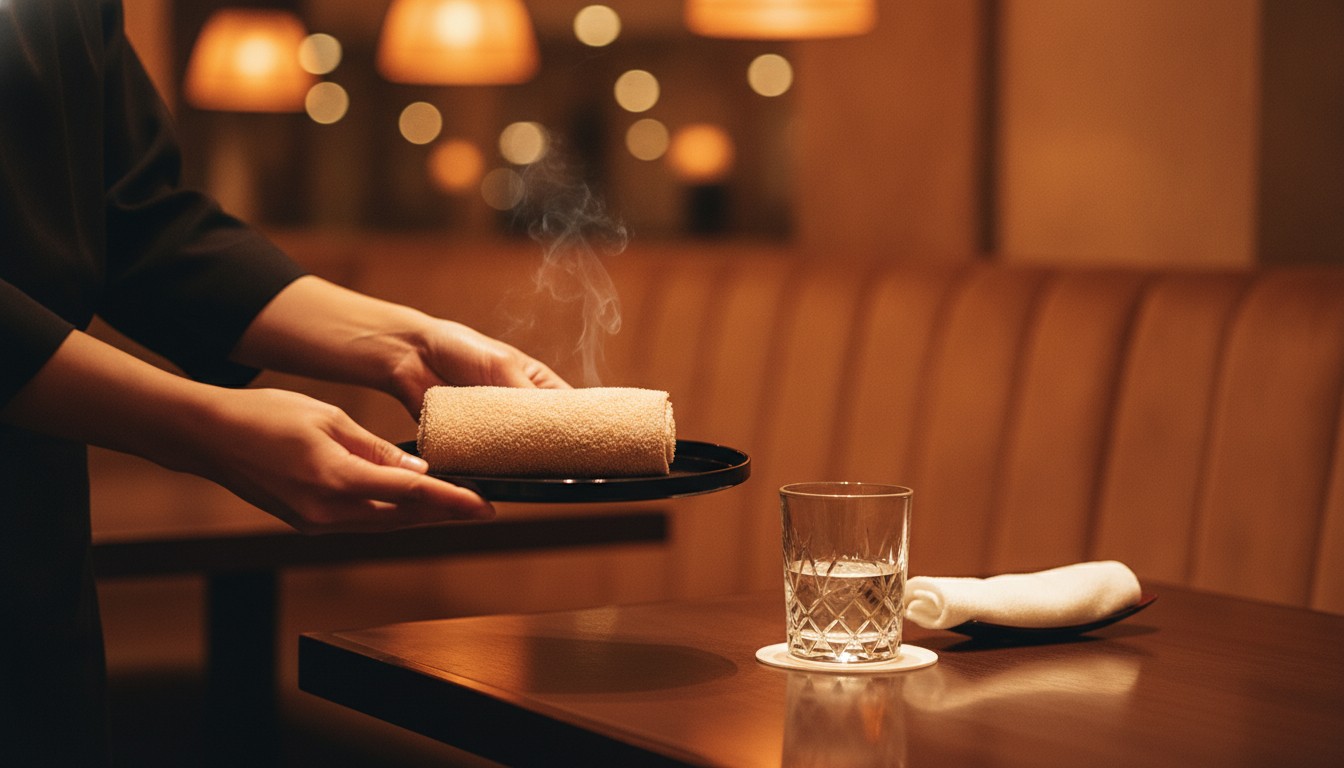
Receive with both hands. When something is handed to you — a drink, a hot towel (oshibori), a business card — receiving it with both hands, or with a light touch of the second hand, reads as gracious. It's a small thing that signals respect.
Keep it relaxed and respectful. The tone of a premium lounge is convivial, not rowdy. Warmth, humour and genuine conversation are exactly right; loud aggression is not. Treat the hostess as the professional company she is, and the evening will be effortless.
Don't reach for a tip. As above — the impulse is kind, but the graceful move is simply to say thank you sincerely. Arigatou gozaimasu goes a very long way.
Let the staff guide you. If you're unsure about anything — where to sit, how extensions work, when to close out — just ask. A foreigner-friendly venue expects questions and answers them warmly. There's no hidden test you can fail. Our how it works guide walks through the flow of a typical evening if you'd like to arrive already knowing the shape of the night.
How "foreigner-friendly" (中文服务) makes the culture accessible
There's a beautiful irony at the center of omotenashi for a foreign visitor: the culture is built around making the guest comfortable, yet a language barrier can lock you out of feeling that comfort. What good is being anticipated and cared for if you can't relax into the conversation?
This is exactly the gap that foreigner-friendly venues close. A genuinely international premium lounge extends omotenashi across the language line — offering Chinese-language service so that the booking, the pricing and the hosting all happen in a language you actually think in. When the price was explained in your own language, when your hostess can share a joke with you directly, the full warmth of the culture finally reaches you. The hospitality was always there; language is simply what lets you feel it.
For Chinese-speaking travellers specifically, we wrote a dedicated companion piece — the Chinese-speaking Shinjuku nightlife guide — on how to plan an entire evening with zero language stress. Read alongside this cultural primer, it turns "I've heard omotenashi is special" into "I understood exactly what was happening, and I could enjoy every minute of it."
Frequently Asked Questions
Do I really not tip at a Shinjuku premium lounge? Correct. Japan has no tipping culture, and a premium lounge is no exception. Excellent service is included and offered as a matter of professional pride. Just say thank you sincerely — that's the graceful thing to do.
What exactly does a hostess do? A hostess is a professional conversation host who sits with you, pours your drinks, and keeps the evening warm and relaxing. It's upscale social hospitality — company and conversation, delivered with genuine care.
Why does transparent pricing matter so much? Because a guest worried about the bill can't truly relax, and putting the guest at ease is the whole point of omotenashi. Clear, upfront pricing is respect made concrete. You can see ours on the pricing page.
I don't know Japanese etiquette — will that be a problem? Not at all. Omotenashi flows toward the guest, and foreigner-friendly venues expect and welcome visitors. A little grace goes a long way, but no one expects perfection. See the FAQ for more.
Experience omotenashi for yourself
Understanding the culture is one thing; feeling it is another. When the price is transparent, the tipping anxiety is gone, and the hosting happens in a language you're comfortable in, all that's left is a genuinely warm evening — the kind Japanese hospitality has quietly perfected over centuries.
- See exactly what an evening costs on our transparent pricing page
- Get your remaining questions answered in the FAQ for international visitors
- When you're ready, reserve your evening at LUXE Shinjuku
Come as a guest, not a customer. That distinction is the whole point — and once you've felt it, you'll understand why omotenashi is one of Japan's quiet gifts to anyone who visits.