Muryo-Annaijo vs. Transparent Booking in Shinjuku — How International Visitors Can Spot Kabukicho Scams
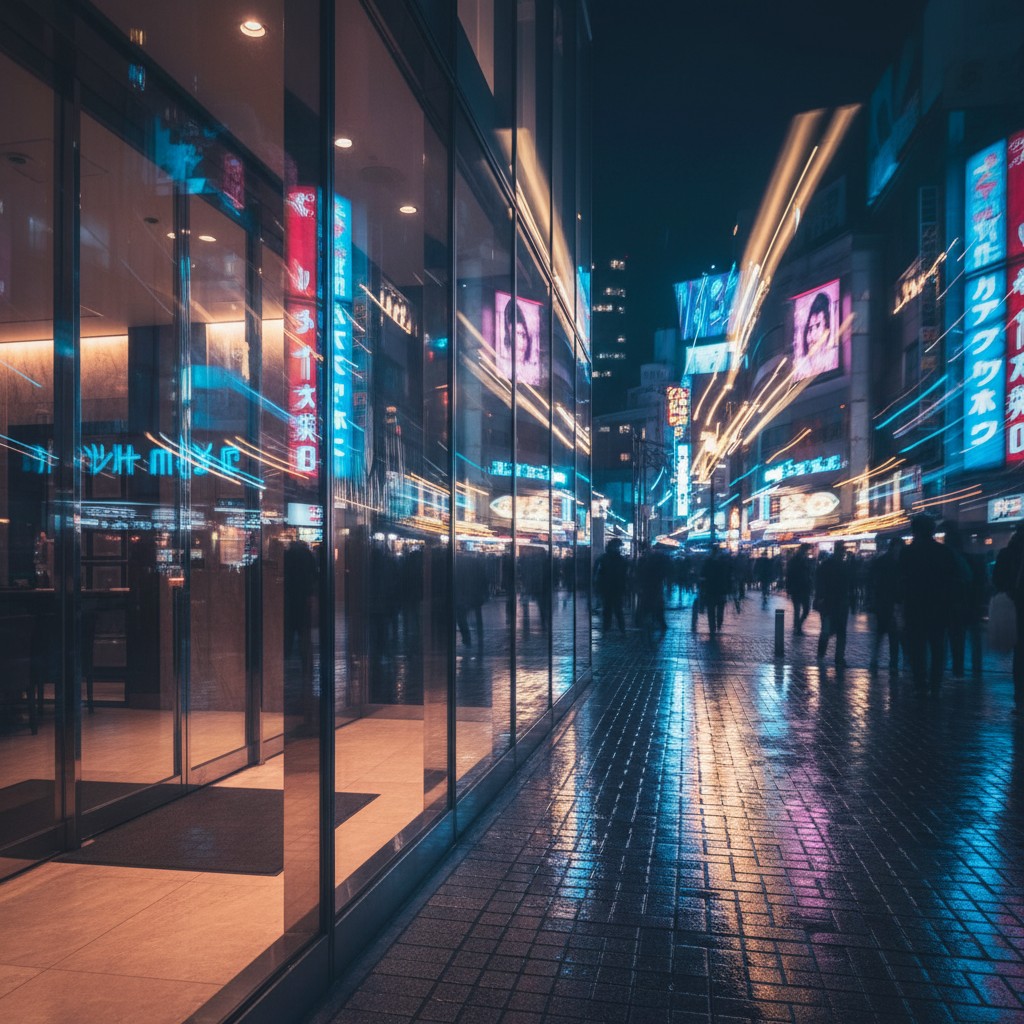
A muryo-annaijo (無料案内所, "free information centre") is the lit-up booth on the corner with hostess photos in the window and someone out front who greets you in your own language. The introduction really is free. What isn't free is the rest of your evening. These stands run on commission: the venue they walk you into pays them a cut for every head they deliver, and at the cheaper end of the scale that cut comes straight back out of your bill. If your first night in Kabukicho goes wrong, this is usually where it starts.
The fix is not complicated, and it has nothing to do with bravery or street smarts. Book a place in advance where the price is published before you arrive, walk yourself to the door, and the whole model loses its grip on you. Here's how the two paths actually differ.
What a muryo-annaijo really is
The word translates literally as "free information centre," and on the surface it's exactly that: a person who says, "I'll take you to the best club in Kabukicho — no charge for me." The introduction costs you nothing. The economics behind it are the catch.
The stand earns a referral fee from the venue. Send in a customer, take a cut of what they spend. That's the entire business. Reputable, transparently priced venues don't need it and mostly don't use it, so the stands fill up with the places that do need to buy footfall — and those are disproportionately the ones with a reason to inflate your tab once you're seated.
So your "free" introduction is paid for. Just not by the stand. The referral comes off your bill in the form of vague set fees, a "seat charge," an "ice charge," a weekend surcharge, drinks priced at whatever the room decides. None of it posted anywhere you could have read first.
How the bill gets inflated
The classic version is a bottakuri (ぼったくり) trap, and it follows a script. You're walked in on a cheap promise — "¥3,000, all you can drink." The price on the wall is vague or absent. An hour later the check arrives and it's three, four, ten times what you were told, padded with fees nobody mentioned. Challenge it and the pressure to pay, now, in cash, ramps up fast.
Not every handoff ends this way. Some are perfectly ordinary. The problem is that you cannot tell which is which from the sidewalk, and for a foreign visitor with no Japanese-speaking local at your side, that's a bet with bad odds. The uncertainty is the product. Remove the uncertainty and there's nothing left to fear.
Is it legal?
Mostly grey, and that's not the protection it sounds like.
Touting on the street — physically leading customers into a venue — is banned under Shinjuku Ward's anti-solicitation ordinance. Kabukicho 1- and 2-chome are designated zones, and the penalty escalates from guidance to a warning to a formal recommendation, then a fine. Enforcement campaigns in recent years have thinned the touts out without ending them; plenty still work openly, because proving coercion without hard evidence is difficult.
The 2025 Fūeihō revision also banned "scout-back" referral payments and raised penalties sharply (up to five years or a ¥10 million fine for individuals, far more for companies). The legitimate end of the industry is getting more regulated, not less.
But here's the honest read: legality isn't really the point for you. A stand can operate within the letter of the rules and still funnel you somewhere that empties your wallet. What protects you isn't whether something is technically legal. It's whether you could read the price before you sat down.
What a transparent booking looks like instead
The opposite approach is verifiable at every step, before you spend a single yen.
You reserve online and your name and party size are on record. You can book LUXE Shinjuku here and a written confirmation comes back. The price is published up front — at LUXE, first-time Main Floor is ¥7,000 and the VIP Room is ¥20,000, tax and service already in. Return visits are ¥13,000 and ¥28,000. The only optional add-on is nominating a specific cast (+¥4,000–¥5,000 per set). There is no "premium" middle tier and no hidden third price; what you see is the whole menu.
The address and floor are on your confirmation — 4F, 1-10-3 Kabukicho, a short walk from Shinjuku Station's east side. You take the lift up yourself. Nobody escorts you in. The multi-language staff (English, Japanese, Chinese, Korean) are inside the venue, not working the pavement. Checkout is itemised and takes cards. The number on the bill is the number you already saw.
Do it once and the contrast is immediate. One feels like booking a hotel. The other feels like being sold something in a market.
The three steps that make the problem disappear
You don't need to learn the whole street. Three moves cover it.
- Reserve before you reach Kabukicho. Open the venue's site over dinner. A real one takes a booking in a couple of minutes and sends written confirmation.
- Walk straight to the address. Use the map. Ignore everyone on the pavement. Enter the building, take the lift, check the floor against your confirmation.
- Pay inside, on the itemised bill. If anything doesn't match, raise it calmly with the floor manager. A transparent venue sorts it on the spot.
Follow those and the muryo-annaijo problem evaporates, because you were never their customer to begin with.
When a tout approaches you anyway
They will. It's their patch and they work in volume. You don't need to argue or apologise — you need to keep moving. A flat "no thank you" in English or Japanese, eyes forward, steady pace. You owe no one an explanation, and they'll drop you for the next walk-in within seconds.
If someone physically blocks you or tries to steer you into a building, step into the nearest bright, open business — a konbini, a chain izakaya — and carry on from there. The well-lit spine around the Tokyu Kabukicho Tower and Godzilla Road is calm; the risk lives in the narrow alleys. Kabukicho Kōban, the police box on the south side, handles foreigner cases all the time.
If you want the fuller picture on the district itself, Is Kabukicho safe at night? goes deeper. And if you're still working out what these venues actually are, what an oppai bar is lays out the category and the billing in plain terms.
A few common questions
Are all muryo-annaijo scams? No. Some handoffs are fine. But you can't tell in advance which ones inflate the bill, and for a visitor with no local to vouch for the place, that uncertainty isn't worth carrying. A transparent advance booking removes it entirely.
They're free, so what's the harm? The introduction is free. The referral fee that pays for it isn't — it's built into a bill you didn't get to read first. "Free" is doing a lot of quiet work in that sign.
I've already been overcharged at a place a tout took me to. Now what? Keep the receipt. If the overcharge is serious, note the venue name and report it through Tokyo's consumer affairs line or your hotel concierge. For the rest of the trip, switch to transparent advance bookings and the issue won't recur.
How do I spot a legitimate venue from outside? Real street address with a floor number, an elevator building, prices published on the website, genuine Google reviews, multi-language booking. Published price plus real reviews means you're in the right place.
The bottom line
The muryo-annaijo model survives on one thing only: visitors who don't know there's a cleaner option. The moment you book ahead, see the price, and walk into the building on your own, the stand on the corner has nothing to sell you.
That's the line between a first night in Kabukicho that ends with a good story and one that ends with an argument at the till. Book the transparent way — it takes about a minute, and the price you see is the price you pay.