Big Tokyo Clubs vs. Premium Private Lounges in Shinjuku — Which Kind of Night Is Right for You?
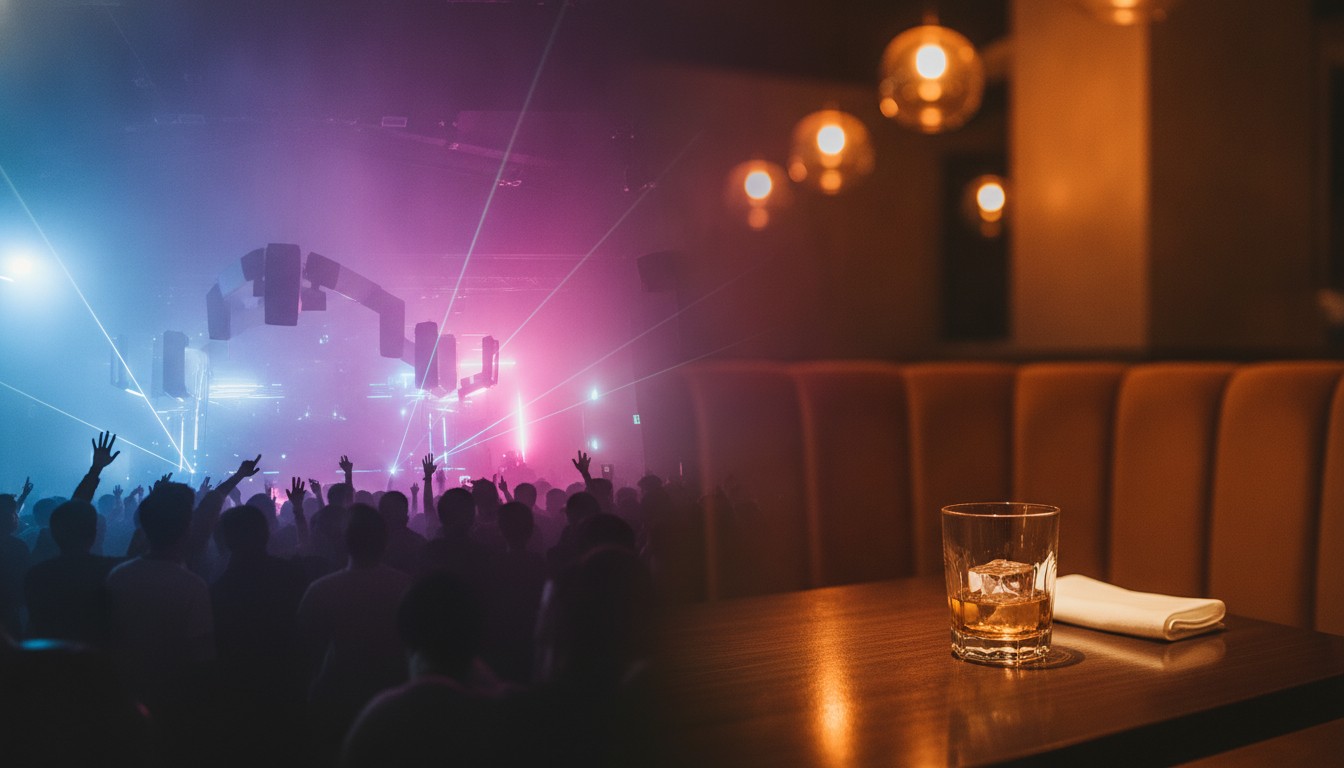
If you search "where to go out in Shinjuku" before a trip to Tokyo, you quickly run into a wall: the results throw everything into one bucket called "nightlife," as if a 2,000-person warehouse rave and a quiet corner table with attentive service were the same experience. They're not. They're almost opposites.
For an international visitor with one or two free nights, the single most useful thing you can do is understand that Tokyo's nightlife splits into two very different worlds — the big clubs and the premium private lounges — and then pick the one that matches the night you actually want. This guide lays them side by side, honestly, so you can choose with your eyes open. It pairs well with our broader Shinjuku nightlife guide for international visitors, which covers the district as a whole.
The two worlds, in one sentence each
A big club — think ZERO TOKYO in the Kabukicho Tower complex, or WARP Shinjuku — is a large-format venue built around a dance floor, a headline sound system, and a crowd. You go for the music, the lights, and the energy of being one of hundreds of people moving to the same beat.
A premium private lounge is the opposite scale: a small, calm room where you're seated, looked after by attentive staff, and the whole point is conversation, a good drink, and a relaxed few hours with people who make you feel welcome. You go for the company and the comfort, not the crowd.
Neither is "better." They solve different cravings. The mistake is walking into one when you actually wanted the other.
Big clubs (ZERO TOKYO, WARP): what they're great at
Tokyo's mega-clubs have had a real moment since ZERO TOKYO opened inside the Kabukicho Tower. On a strong night, the production is genuinely world-class — international DJs, a serious sound rig, and a young, fashion-forward crowd. For a certain kind of night, nothing else comes close.
The energy is the product. If what you want is to dance, hear a name DJ, and be swept up in a big anonymous crowd, this is exactly right. The scale is the whole appeal.
Entry is simple and low-commitment. You pay a door charge (often bundled with a drink or two), you walk in, and you're free to do your own thing. Nobody's managing your evening. For solo travelers or groups who just want to be let loose, that simplicity is a feature.
It's easy to be anonymous. In a crowd of hundreds, you can show up, enjoy the music, and leave whenever you like. There's very little social choreography to learn.
Where big clubs are less ideal: they're loud enough that real conversation is hard, they can feel impersonal if you don't already have a group, and the "foreigner-friendly" experience is really just "nobody bothers you" rather than "someone looks after you." If you're hoping to actually connect with people or be guided through the evening, a warehouse dance floor is the wrong tool.
Premium private lounges: what they're great at
The other world is the one Kabukicho is quietly more famous for among people who know it well: small, high-end lounges where the experience is built around hospitality rather than volume. At a good venue, you're seated, a member of staff (a 佳丽 / hostess in the local tradition) joins your table, drinks are poured, and the next couple of hours unfold as easy, unhurried conversation and company.
You're looked after, not left alone. This is the core difference. In a lounge, someone's job is to make sure you're comfortable, your glass isn't empty, and you're never standing awkwardly at the edge of a room. For a visitor who doesn't speak Japanese, that attentiveness is worth a lot.
It scales down beautifully for one or two people. Big clubs reward big groups; lounges are perfect if you're traveling solo or as a pair. A quiet table for two people to actually talk is exactly what these venues are designed for.
Foreigner-friendly here means genuinely accommodating. At the better lounges, "foreigner-friendly" isn't just tolerance — it's Chinese-language service, clear explanations, and staff who are used to international guests. (We go deep on exactly that in our Chinese-speaking Shinjuku nightlife guide.)
Where lounges ask more of you: they work best with a reservation, the etiquette is slightly more involved than "pay at the door and walk in," and the value comes from engaging with the experience rather than passively consuming it. If you just want to be anonymous in a crowd, a lounge will feel like too much attention.
Side-by-side: how they actually differ
Vibe. Big club = loud, high-energy, crowd-driven. Lounge = calm, personal, conversation-driven.
Best group size. Big club = groups and solo-who-want-a-crowd. Lounge = solo travelers and pairs, small groups.
What you're paying for. Big club = the music, the room, the night's headline act. Lounge = the company, the service, and time in a comfortable private setting. We break the money down properly in our pricing guide.
Language pressure. Big club = low, because you barely need to talk to anyone. Lounge = potentially higher — unless you choose a venue with Chinese-language service, in which case it's the smoothest experience of the night.
Booking. Big club = walk-up is normal. Lounge = reserve ahead; it's the difference between a curated evening and a gamble.
Predictable cost. Big club = door charge plus whatever you buy at the bar, which can quietly add up. Lounge = at a transparent venue, a clear set price that tells you the damage before you sit down.
What about safety and going alone?
Both worlds are, on the whole, safe for international visitors — Kabukicho is far less lawless than its reputation suggests — but they handle a solo guest very differently. In a big club, being alone is completely unremarkable; you're one face in a crowd and nobody expects anything of you. The flip side is that no one is looking out for you either, so you manage your own drinks, your own pace, and your own exit.
In a premium lounge, going alone is not just fine — it's often the ideal way to experience it, because the entire format is built around one guest being attentively hosted. If you're a solo traveler weighing whether a quiet lounge is "weird" to visit alone, it isn't; it's arguably what these venues do best. We answer this exact worry, along with the other first-timer questions, on the FAQ.
The one thing both worlds share: choose transparency
Whichever style you pick, Kabukicho has one universal rule for international visitors — know your price before you commit. Big clubs are usually straightforward at the door, but the district is also home to touts and "free information centers" (無料案内所) that funnel unaware tourists toward venues with opaque, inflated bills. That risk exists regardless of whether you want a dance floor or a quiet table.
The defense is the same in both worlds: book a venue that publishes its prices and confirms them in writing before you arrive. We wrote a full explainer on exactly how this scam works and how to sidestep it in Muryo-Annaijo vs. Transparent Booking — it's worth ten minutes before any night out in Shinjuku.
So which should you choose?
A few honest rules of thumb.
Choose a big club if: you're traveling with a group that wants to dance, you love EDM and big-room energy, you don't mind an impersonal crowd, and you want the freedom to come and go without any planning. ZERO TOKYO or WARP will deliver exactly that.
Choose a premium lounge if: you're solo or a pair, you'd rather talk than shout, you want to be genuinely looked after, and — especially — if language is a worry and you'd value Chinese-speaking staff who make the whole evening effortless.
Do both, on different nights, if you have more than one evening. Honestly, this is the move for a lot of visitors: a high-energy club night to feel the scale of Tokyo, and a relaxed lounge night to actually unwind. If you're not sure how a lounge evening flows step by step, our how-to-play walkthrough explains it start to finish, and the FAQ answers the practical questions first-timers always ask.
Ready to plan your night?
If a calm, well-looked-after, foreigner-friendly lounge evening is the one calling to you, the single best thing you can do is reserve ahead at a venue with transparent pricing and Chinese-language support. That one decision removes almost every worry international visitors have about Shinjuku nightlife — language, price, and safety — before you even leave your hotel.
You can book your LUXE Shinjuku experience here, check exactly what's included on the pricing page, or start with the full visitor guide if you'd like the bigger picture first. Whichever world you choose tonight — the crowd or the conversation — go in knowing what you're getting, and it'll be a great one.