Tokyo Rainy Season (Tsuyu) 2026 — The Indoor Premium Nightlife Guide for International Visitors
Tokyo's Rainy Season Is Not a Lost Trip — It's a Better Night Out
If you've booked a Tokyo trip for June 2026, you've probably already searched "is it bad to visit Tokyo in tsuyu?" and read a dozen versions of the same disappointing answer. The truth is more interesting. Yes, Tokyo's rainy season (梅雨, tsuyu) runs roughly from early June through mid-July, and yes, daytime sightseeing gets unpredictable. But the same weather that complicates a daytime itinerary makes Tokyo's indoor evening experiences — especially premium nightlife in Shinjuku Kabukicho — quieter, more comfortable, and far easier to book than during the rest of the high season.
This guide is written for international visitors planning Tokyo nightlife in tsuyu 2026. It covers when the rain actually arrives, why the venues you want are better on a wet weeknight, how to route from your hotel to Kabukicho without ruining your shoes, what to wear, and how to lock in a transparent, reservation-only evening that doesn't depend on the weather cooperating.
For a wider look at our standard recommendations across the year, you can pair this with our complete Shinjuku nightlife guide for international visitors.
When Is Tsuyu in 2026, Really?
The Japan Meteorological Agency typically declares tsuyu for the Kantō region (which includes Tokyo) somewhere between June 6 and June 11, with the season ending around July 19 to July 22. Tokyo doesn't rain solidly for six weeks — that's the most common misconception. In a typical year you get:
- 8–12 days of meaningful rainfall in June
- Several stretches of two or three dry days in a row
- Higher humidity (often 75–85%) even on dry days
- Warm evenings (low 20s°C) — comfortable inside, sticky outside
For 2026, expect a fairly typical pattern: heavier rain in the second half of June (around the hydrangea peak), a brief "false break" in early July, then a final stretch of rain before the Kantō declaration of tsuyu-ake (rainy season end). Most international visitors who plan well end up with one or two genuinely wet days out of a 5–7 day trip — far less than the worst-case forecast suggests.
For peak hydrangea (紫陽花) viewing — a perfect daytime pairing for an evening in Shinjuku — see our companion piece on the Kamakura hydrangea day-trip with a Shinjuku premium evening itinerary.
Why Indoor Premium Nightlife Is At Its Best in Tsuyu
Here is the counter-intuitive part. The rainy season is one of the best windows of the year to experience Shinjuku's premium indoor nightlife. Three reasons:
1. Lower foreign-visitor density. International arrivals in Tokyo dip noticeably between Golden Week (early May) and the summer matsuri season (late July). June is genuinely an off-peak month. That means fewer last-minute walk-ins competing for tables, more attention from staff per guest, and far less of the rushed feeling you sometimes get during cherry blossom or Golden Week.
2. Weather-proof by design. A premium lounge is, by definition, an indoor experience. You're not standing in a queue, you're not in an open courtyard, and you're not depending on a rooftop view. Once you step out of the elevator on the venue floor, the weather outside stops mattering for the next 90 minutes to 3 hours.
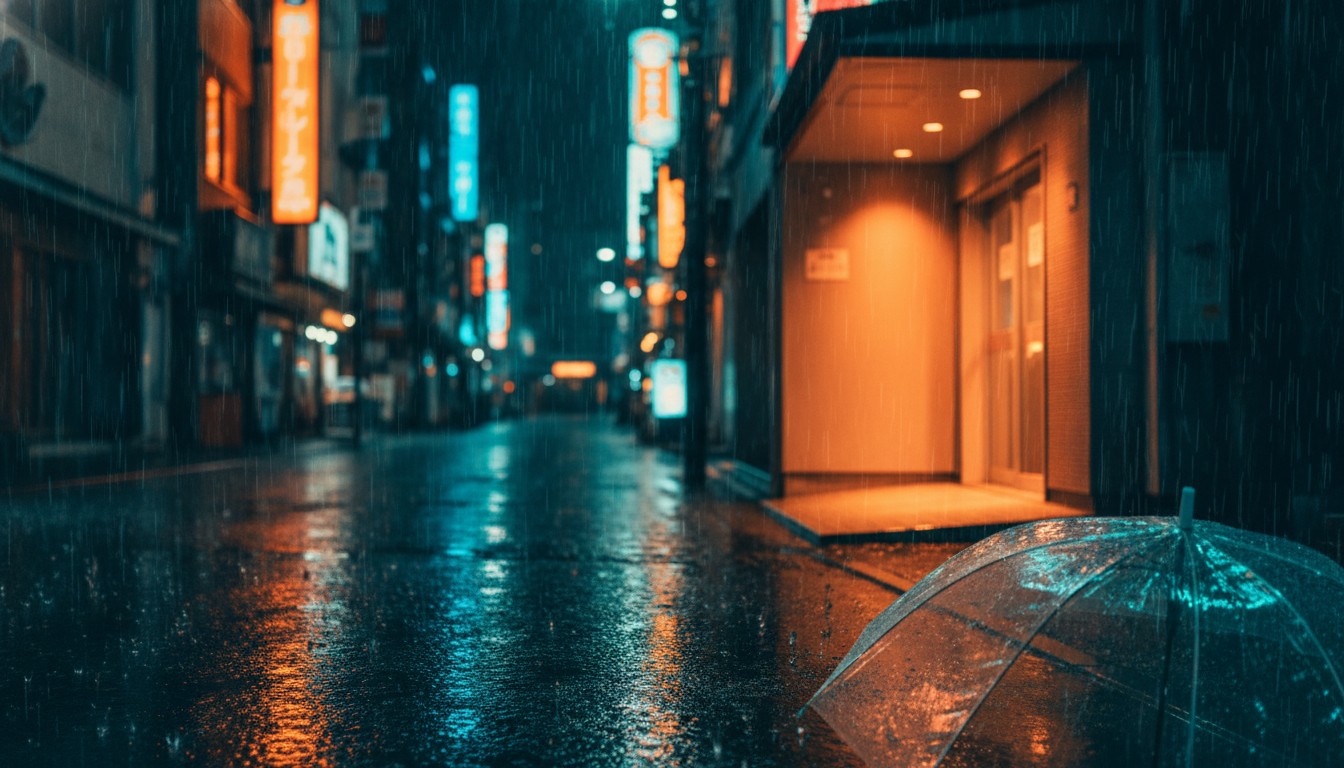
3. The "rainy night" atmosphere is genuinely appealing. Tokyo at night in the rain — neon reflecting off wet pavement, the muffled hush of traffic, umbrellas folding shut in the lobby — is the city at its most cinematic. A calm, well-lit lounge with a quiet conversation pace is the perfect counterpoint.
For pricing, you can confirm everything up front: view LUXE Shinjuku's transparent pricing before you commit to a reservation.
Day-by-Day: Which Tsuyu Evenings Are Calmest
Across a typical tsuyu week, the rhythm of foreign-visitor traffic in Kabukicho is fairly predictable:
- Sunday–Tuesday evenings — Lightest crowds of the entire week. Excellent timing for first-time international visitors who want a relaxed pace and full multilingual staff attention. Reservations confirmed within hours.
- Wednesday–Thursday evenings — Moderate. The "mid-week pickup" of business travelers and Asia-region weekend-extenders. Still very comfortable; recommended for travelers who can't shift their schedule.
- Friday evenings — Tokyo's standard weekly peak, even in tsuyu. Reservation strongly recommended. Plan to arrive earlier (8 PM rather than 10 PM).
- Saturday evenings — Busiest night of the tsuyu week, but still notably calmer than a non-rainy-season Saturday. Reserve at least 48 hours ahead.
- Heavy-rain warning days — Counter-intuitively, the quietest of all. When the JMA issues a 大雨注意報 (heavy rain advisory), the casual walk-in crowd evaporates. If you're already in town and properly dressed, this is the perfect night to upgrade to an experience you'd usually skip.
If you can choose any night during your trip for the premium-lounge evening, a Tuesday or Wednesday in the second half of June is statistically the most relaxed slot.
Hotel → Kabukicho: Staying Dry on a Wet Night
The single biggest practical question international visitors ask about tsuyu Tokyo nightlife is: how do I get there without getting soaked? Three routes work well:
Route A — Underground from any major JR station. Shinjuku Station has an extensive underground network that connects directly to several Kabukicho-adjacent exits. From inside the station, follow signs for the 東口 (East Exit) / 中央東口 (Central East Exit). You'll surface on Yasukuni-dōri only about two minutes from the Kabukicho gate, with covered arcades for most of the final stretch.
Route B — Taxi from your hotel. Tokyo taxis are abundant, English-friendly enough for an address, and accept all major international credit cards. From any central Tokyo hotel (Roppongi, Ginza, Marunouchi, Asakusa, Shibuya), the ride to Kabukicho is 15–25 minutes and ¥1,800–¥3,500. On a heavy-rain night this is by far the most comfortable option.
Route C — Stay walking-distance. If you're booking a Tokyo trip specifically around evening experiences, staying inside the Shinjuku station catchment (within 10 minutes' walk of the East Exit) eliminates the weather question entirely. Hotel categories from business-class (¥12,000–¥18,000) to high-end (¥45,000+) are all available in this radius.
Whichever route you choose, plan the last 200 meters as outdoor walking — Kabukicho's high-rise venues sit at street level entrances. A compact 60cm folding umbrella in your bag solves this completely.
What to Wear in Tsuyu That Still Looks Right Inside
The most common international-visitor mistake in tsuyu is dressing for the weather and forgetting the venue. A premium lounge doesn't have a strict suit-and-tie code, but it does expect smart-casual. Three combinations that work for almost any guest:
- Smart-casual men's option — Dark trousers (chino or wool blend), a button-down or premium polo, leather or clean dark sneakers. Bring a light rain shell that folds into your bag rather than a bulky raincoat.
- Smart-casual women's option — A midi dress or smart top with trousers/skirt, ankle boots or low-heel pumps (avoid open sandals on rainy nights — Tokyo sidewalks splash). A lightweight cardigan handles over-air-conditioned indoor venues.
- Universal additions — A compact umbrella, a small microfiber towel for the lobby, and a pair of moisture-wicking socks if you've already walked in wet shoes earlier in the day.
Most premium venues have a coat-check or umbrella stand at the entrance. You don't need to bring a change of clothes — just arrive presentable, and the venue handles the rest. For more on the in-venue flow, our how-to-play page walks through arrival, seating, and check-out step by step.
The Booking Sequence That Works in Tsuyu
Compared to Golden Week or summer matsuri season, tsuyu booking is genuinely easy — but a few small habits make the difference between a smooth night and a frustrating one:
- Decide your "Plan A" date and your "Plan B" date. Build in one alternate evening in case heavy rain reroutes your daytime plans. Premium venues will rebook within 24 hours' notice if you ask politely.
- Reserve online, in writing, in English. Avoid any phone or street arrangement during tsuyu — wet weather is exactly when scam-prone "free guide" (無料案内所) touts ramp up activity around Kabukicho.
- Confirm the all-in price up front. A reputable foreigner-friendly venue will quote your seat type, time window, and starting all-in price in the booking reply. Save that message on your phone.
- Plan your route the day-of, not the night-of. Check the JMA rain forecast at noon. If heavy rain is expected after 7 PM, switch to a taxi-from-hotel plan rather than a multi-leg train route.
- Arrive 5–10 minutes early. A calm, slightly-early arrival on a wet night is the universal sign of a guest who knows what they're doing.
If you want a specific recommendation, you can book your seat at LUXE Shinjuku directly online — confirmation usually within a few hours, multilingual staff, transparent ¥7,000+ pricing, Google 4.8★ from 310+ reviews.
How Tsuyu Compares to Other Tokyo Nightlife Windows
A practical comparison for travelers deciding between visiting in June vs. another month:
- June (tsuyu) — Off-peak. Reservation-friendly. Indoor experiences thrive. Outdoor hanami/sakura is gone; outdoor matsuri hasn't started. Best month for nightlife-led trips.
- May (post-Golden Week) — Briefly calm in mid-May after Golden Week ends, then accelerating through the end of the month. Still good. See our Golden Week 2026 Shinjuku premium nightlife guide for context on the May 7–31 lull.
- July (post-tsuyu, pre-Obon) — Hot, humid, but increasingly busy as summer matsuri season ramps up. Still bookable, but evenings are stickier outdoors.
- August (Obon week) — Tokyo nightlife rebounds hard. Reservations much tighter than tsuyu.
- November–early December — A second off-peak window. Cold but dry; comfortable evenings.
If your decision is "should I cancel my June trip because of tsuyu?" the answer is firmly no. Reframe it as: your trip just got a higher-quality evening for the same budget.
Avoiding the Tsuyu-Season Scams in Kabukicho
Wet weather pushes street touts to be more aggressive — they know visitors are tired, distracted, and looking for somewhere to step out of the rain. Two practical rules:
- Never accept a "free guide" (無料案内所) offer. No legitimate premium venue in Kabukicho uses street recruiters. The free-guide offices are the entry point for almost every tourist pricing complaint you'll find online.
- If someone with an umbrella approaches you outside Kabukicho Tower and offers to walk you to a "good place," decline politely and keep moving. Use your already-confirmed reservation address on your phone as your destination.
For a deeper read on this specific risk, see our trust-and-safety comparison: Muryo-Annaijo vs. Transparent Booking — How International Visitors Spot Kabukicho Scams.
A Sample Tsuyu Evening Itinerary
For a single rainy-night example, here is a realistic timeline an international visitor could follow:
- 6:00 PM — Check the JMA radar from your hotel; finalize Plan A or Plan B.
- 6:45 PM — Light dinner near your hotel or at a Shinjuku station-connected restaurant (avoids walking in rain on a full stomach).
- 8:00 PM — Taxi or covered-walk route to Kabukicho. Aim to arrive 8:15–8:25 PM.
- 8:25 PM — Check coat and umbrella at the venue lobby. Confirm seating with the host.
- 8:30 PM – 10:30 PM — Your premium-lounge experience. Two-hour standard window is the sweet spot for a first visit.
- 10:30 PM — Settle the all-in bill (international cards accepted). Optional 30-minute extension if you're enjoying the conversation.
- 11:00 PM — Walk to the covered station entrance, or taxi back. Tokyo's last trains run until roughly midnight; taxis run all night.
For any questions you might still have, our FAQ page covers nationality requirements, payment methods, language coverage, and dress code in detail.
Tsuyu 2026 — Your Quiet Window in Tokyo
The rainy season in Tokyo is widely misunderstood by visitors who default to outdoor itineraries. For travelers willing to flip the script — indoor evenings, transparent reservation venues, off-peak weeknights — June 2026 is one of the best Tokyo premium nightlife windows of the entire year. You get the same quality of experience as Golden Week or summer matsuri, but with shorter waits, more staff attention, and notably easier booking.
If a calm, multilingual, transparent evening in Shinjuku Kabukicho is on your list for this trip, the easiest single step is to lock in your night now: reserve your seat at LUXE Shinjuku and stop worrying about the forecast.
FAQ — Tokyo Tsuyu Nightlife 2026
Q: When is tsuyu 2026 in Tokyo? The Japan Meteorological Agency typically declares Kantō tsuyu around June 6–11 and ends it around July 19–22. Expect heaviest rain in the second half of June.
Q: Will my evening be cancelled if it rains heavily? No. Premium indoor venues like LUXE Shinjuku operate normally in all weather. Trains and taxis run regardless. Only typhoon-level (台風) advisories occasionally affect train timing, and tsuyu rain is well below that threshold.
Q: What's a fair starting price for a foreigner-friendly Shinjuku premium lounge? From ¥7,000 all-in (tax and service included) is the standard transparent starting point at LUXE Shinjuku. Anything significantly below that price quoted on a Kabukicho street should be treated as a scam.
Q: Is English enough, or do I need Japanese? English is sufficient at venues catering to international visitors. LUXE Shinjuku has multilingual staff and routinely serves guests in English, Mandarin, Cantonese, Korean, and Japanese.
Q: Can foreign residents of Japan (not just tourists) book? Yes. LUXE Shinjuku welcomes both visiting tourists and foreign residents of Japan. Some competitors restrict their booking to short-term visitors only — this is not the case here.