Hostesses, Jiālì, and Jokyū — A Cultural Guide to Japanese Premium Nightlife for International Visitors
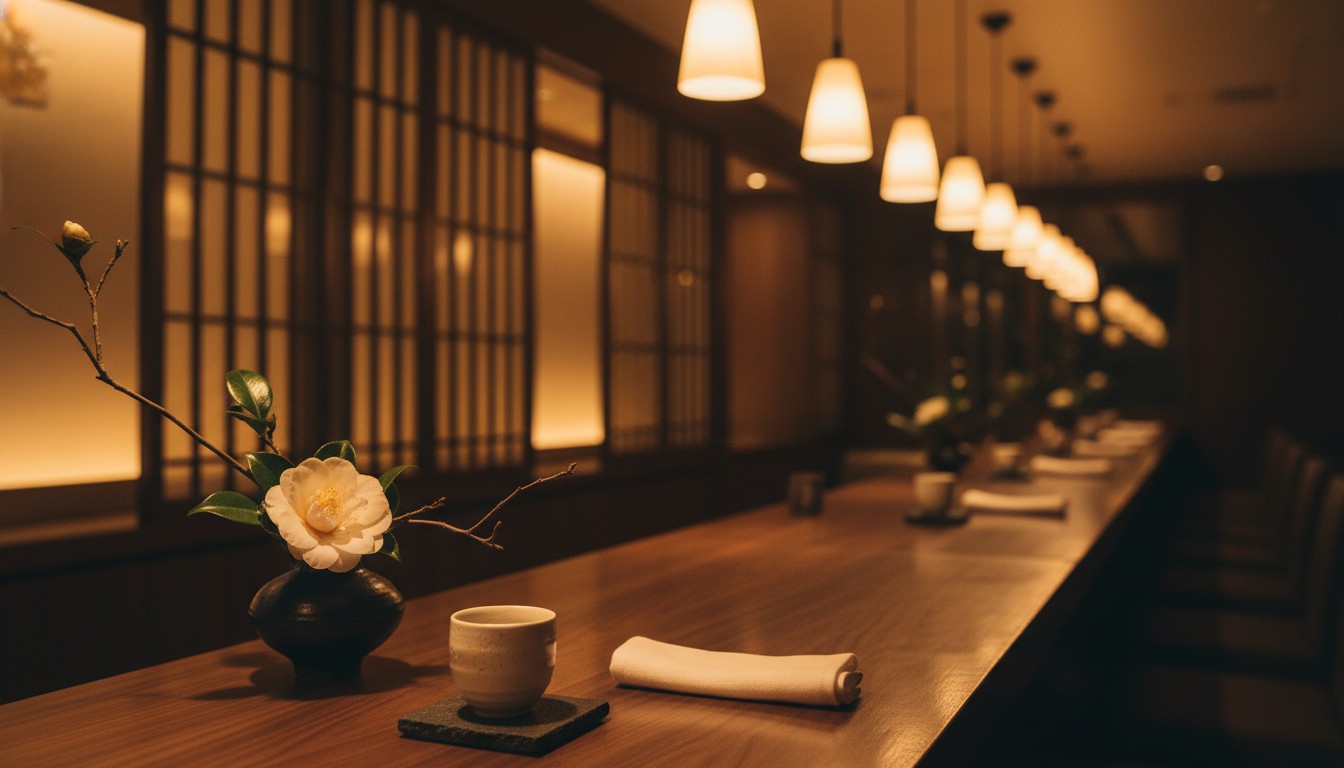
Most Tokyo nightlife guides tell you the what — which clubs, what to order, how much to budget. Almost none explain the who. In a Kabukicho hostess lounge the woman at your table isn't a waitress, a bartender, or a date. She's a hospitality professional whose actual craft is the conversation and the mood of the room, and once you understand that, the whole evening reads differently.
This is the cultural layer underneath the practical one: where the profession comes from, what the work really is, and how to walk in with the same respect you'd bring to a tea house. Those two things are closer relatives than they look.
One job, three names
Tourist guides throw three words around as if they're interchangeable. They're not quite.
- Jokyū (女給) is the old Japanese term for the café waitresses of the Meiji and Taishō eras — roughly the 1910s and 20s. It reads literally as "woman who serves", and it's the word you'll meet in any history of the trade.
- Hostess is the modern English-language industry term, the one that travelled internationally as Tokyo's hostess clubs matured from the 1960s on.
- Jiālì (佳麗) is the Chinese-language word, common in mainland, Taiwan, and Hong Kong writing. It means something like "elegant beauty" — literary, respectful, much closer in tone to "leading hostess" than to "girl".
Three words, one role: a trained professional whose skill is the conversation, the attentiveness, and the atmosphere of one table for one evening. It sits squarely in Japan's omotenashi tradition of hospitality. Read it as anything cruder and you'll misread the night.
Where the profession actually comes from
It started with coffee. In 1911 a place called Café Printemps (カフェー・プランタン) opened in Ginza, modelled on a French salon, with young women serving Western drinks and light meals and — the part that mattered — sitting and talking with the customers. Plenty of less exclusive cafés followed. By the 1920s the jokyū of Ginza were a recognisable urban type, kimono under a big frilled white apron, and the format of "pay to sit and converse with an attentive woman over a drink" was already taking shape.
Push the lineage back further and you reach the geisha houses — at least three centuries old, centred on Kyoto, Asakusa, and Kanazawa. A modern hostess is not a geisha, and nobody serious confuses the two. But the underlying idea — a woman whose trained skill is the curation of an evening — is inherited from that older world.
The modern shape came together after the war, and Kabukicho is part of that story in a literal way. The district was supposed to get a kabuki theatre, the Kiku-za, in the late-1940s rebuild. The theatre was never built. The name "Kabukichō" was adopted anyway, on 1 April 1948, and the area filled instead with cinemas, dance halls, and — by the boom decades of the 1960s and 70s — the largest concentration of hostess clubs in Japan. The template you'll meet tonight, an assigned table and a published price for a set of time with drinks, was standardised right here, in roughly those years.
So the door you push open in Kabukicho opens onto a profession with more than a century of documentable history behind it. That's why the rituals feel so consistent from one venue to the next.
What the work really is
The single biggest misread by first-time foreign guests: treating a hostess lounge like a bar. A bar sells drinks. Here the drink is a prop. The conversation and the mood of the table are the product.
A good hostess is doing several things at once, most of them invisible:
- Reading the table in the first five minutes. What language do you speak? Are you jet-lagged? Is this a celebration, a quiet wind-down, a first visit, a regular's evening?
- Steering the conversation. Pacing topics, changing subject the moment one cools, drawing in the quiet guest, easing off the one who's dominating. Knowing when to ask, when to listen, when to offer a story of her own.
- Running the drinks and food without ever breaking the thread of the talk.
- The handover. At LUXE a few cast rotate to your table across a 40-minute set; when one steps away she briefs the next on what's been said, so you never repeat yourself. Done quietly, that handover is one of the clearest tells of a serious venue.
- The close. Signalling gently that the set is ending, presenting the bill plainly, walking you to the door without a rush.
It takes most cast months, sometimes years, to get good at this. A sommelier reads your palate; a senior hostess reads your mood. That reading is the thing you're actually paying for.
Where omotenashi fits
If you've eaten kaiseki, stayed in a ryokan, or been served tea in Kyoto, you've already met omotenashi — the hospitality that anticipates a need before you voice it. Its roots run back to the tea ceremony and Sen no Rikyū, and to ichigo ichie: the idea that this gathering happens once and never again, so it's worth getting right.
In a lounge it shows up small:
- the hot oshibori that arrives before you ask
- the glass topped up the moment it drops, without a break in conversation
- the floor manager appearing at exactly the moment something shifts at the table
- the bill handed over in a closed folder, never read aloud, never made into a scene
None of it is improvised. Recognising it as omotenashi rather than ordinary service is the easiest way to enjoy the evening on its own terms.
Five ways it differs from a Western bar
For anyone who knows London, New York, or Singapore nightlife, here's the short map:
- You sit. Nearly the whole evening happens at one assigned table. No drifting from spot to spot.
- You pay for time. A set is a block — 40 minutes at LUXE — with drinks included in the published rate, not a separate running tab.
- No tipping. Service is in the price. This catches almost every first-timer off guard, and it's real: leaving cash on the table is not the done thing.
- The conversation is the show. No DJ, no dance floor, no shots-and-bass arc. The room is built to talk in; the music sits underneath.
- No photos. In almost every lounge, photographing cast or other guests is off the table. It protects everyone in the room.
If a place you're weighing up doesn't fit this shape — prices only said out loud, constant pressure to move, cameras encouraged — treat that as information.
The shimei system, briefly
You'll hear the word shimei (指名), nomination. It comes in two flavours. Jōnai-shimei (場内指名) is when you've been talking to the rotating cast, click with one, and ask to keep her at your table for the rest of the night. Honshimei is naming her up front, before you're even seated. At LUXE nomination is a flat ¥4,000 per cast, per set — and, crucially, it's listed, not improvised at the end. That last part is the whole game.
Showing respect, in three habits
You don't need to memorise Japanese etiquette. Three small things land well:
- Treat her as a professional. Ask about the work, not her private life. The guests cast remember fondly are the curious, easy ones.
- Let the staff set the pace. Don't order ahead of being offered; don't push for an extension. They'll read the right moment.
- Pay quietly, thank her in words. A clear "arigatō gozaimashita" at the door is the right close. No yen on the table.
A word on the word "bar"
English guides flatten half of Japanese nightlife into "bar", and it does real damage. An izakaya isn't a bar. A snack isn't a bar. An oppai bar isn't a bar in the Western sense at all — we wrote a separate piece on what an oppai bar actually is precisely because the translation misleads. A hostess lounge is its own category too. Arrive with bar-shaped expectations and the evening won't land. Arrive expecting something closer to a private dining room, and it will.
The long view
The trade is changing. Foreign guests are now a real share of the room at the international venues, multilingual cast are increasingly common, online booking is standard, and published pricing — once unusual — has quietly become a marker of a place worth trusting. What hasn't changed is the core: at its best, an evening here is a piece of choreography by trained professionals, and the thing they're shaping is your hour. Walk in on those terms and it makes a kind of sense no "best Tokyo bars" list ever will.
If you'd like to see it firsthand, booking a table at LUXE takes about a minute. The cast work in English, Japanese, Chinese, and Korean; the full rate sheet is public — ¥7,000 for a first Main Floor visit, ¥13,000 after, ¥20,000 and ¥27,000 for the VIP Room, tax and service already in — and we're at 4.8★ across 310+ reviews, open 7PM–1AM at 1-10-3 Kabukicho. No one on the street works for us.