First Time at a Tokyo Hostess Club or Oppai Bar — What to Expect
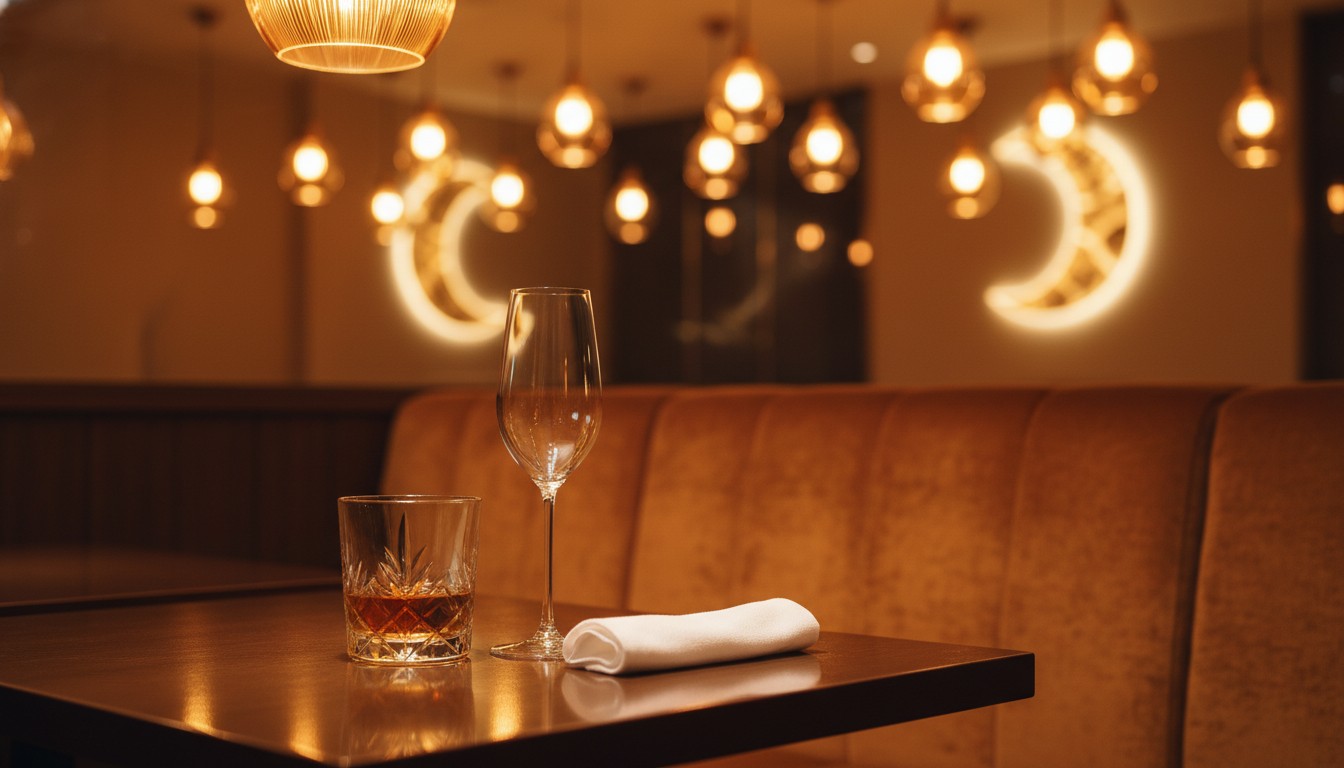
Here's what nobody tells you about your first oppai bar or hostess club in Tokyo: the part that goes wrong is almost never the part you're nervous about. You worry about the conversation, the contact rules, looking foolish. What actually catches people is the door — the price you didn't pin down, the tout who walked you in. Get those two right and the rest is just an evening out. This is the walk-through, in the order it happens.
Before you leave the hotel
Dress like you're going to a decent restaurant. Smart casual is the floor: a collared shirt, clean trousers, real shoes. No suit needed, no tie. What gets you turned away at a Kabukicho door is gym shorts, flip-flops, a tracksuit, or visible work clothes. The cast are dressed up; match the energy and you'll be treated like you belong there. One thing the guides skip — you're sitting close, so go easy on the cologne and mind your breath.
Bring both cash and a card. LUXE takes Visa, Mastercard, AMEX and JCB, but plenty of smaller Kabukicho venues are still cash-only, and a mid-session ATM run kills the mood. If you look anywhere near 20, carry ID — the legal floor for licensed night venues is 20 and the door will check.
Aim for somewhere between 8 and 10 PM. Most oppai bars and hostess clubs run 7 PM to 1 AM — and that 1 AM close isn't a choice, it's what the Fūeihō licence allows. Arrive in that window and the cast is fresh, the room has settled into atmosphere, and you're not the only table. Friday and Saturday, book ahead.
The door, and the only rule that matters
This is where Kabukicho separates first-timers from their money, so slow down here.
Before you sit, you confirm the price out loud. Not the hourly rate — the total. "Forty minutes, drinks included, total ¥X — correct?" If the answer wanders, or includes "depends", you say thanks and leave. A legitimate venue can tell you the number flat. A scam can't, because the whole business model is the gap between what you're told and what you're billed.
At LUXE you choose your seat at this point — Main Floor or the VIP Room, nothing in between — and that's the moment the price is agreed. At the start, never at the end. Front-of-house runs the explanation in your language; at most other places, only Japanese, which is exactly when "I'll just nod along" gets expensive.
What actually happens at the table
A standard set is 40 minutes. You're not picking one hostess at the door. Two or three rotate through your table, roughly ten to fifteen minutes each — one pours your first drink, asks where you're from, and it goes from there: where you're staying, what you've eaten, where you're headed next in Japan. The rotation is deliberate. By the end you've met a few of the cast and worked out who you'd come back for.
Drinks are part of the price at LUXE — whisky, shochu, beer, soft drinks, no per-glass charge. You can buy a hostess a drink if you're enjoying yourself (¥3,000–¥10,000, entirely optional, nobody's keeping score). Contact rules, where the venue type allows any, are set by the house and explained up front; staff hold the line and that rigidity protects everyone in the room. About five minutes before time, someone gives you a quiet heads-up: extend another 40 at the same rate, or close out.
The bill — read this twice
One posted rate at LUXE covers the table, the rotation, the drinks, tax and service. First visit is ¥7,000 Main Floor (online booking only); after that it's ¥13,000 Main Floor, ¥20,000 VIP first visit, ¥27,000 VIP on return. Extensions run the same rate per 40 minutes. The only optional extras are nominating a specific hostess to stay the whole set (+¥4,000) and buying a drink. Nothing appears at checkout you didn't see at the start.
That's not how most of Kabukicho works. The common model is per-head, per-hour, drinks billed separately — often ¥3,000 a glass — and two people over ninety minutes can hit ¥40,000–¥80,000 before anyone's done the maths. The bottakuri version is worse and illegal: vague or missing prices, a final bill two or three times what you were promised, occasionally a refusal to let you leave until you pay. The defence is the door rule above. You only sit down somewhere you could read the price first.
A few things that get people walked out
Don't follow a tout. The most expensive mistake in the district. No venue worth your money recruits on the pavement — if someone's steering you somewhere, the bill at the other end is quietly covering their commission, or it's a trap. Keep walking, even if they "recommend LUXE", because we don't pay anyone to stand on the street.
Don't ask for her LINE or Instagram. House rules forbid it and she has to refuse — you've just put her in a bad spot and the room noticed.
Don't treat her as anything other than a hospitality professional who chose this work. Crude propositions don't land; they get you shown the door.
And don't try to renegotiate after you've sat down. The number was the number.
Why this is the easy first night
Most Tokyo oppai bars run in Japanese only, with pricing a first-timer can't predict. LUXE was built for the opposite case. Everything happens in English, 日本語, 中文, 繁體中文 or 한국어 from the door. The rate is all-inclusive and public, and it's the number on your bill. You can book online in about a minute to lock it — walk-ins pay the same, so there's no penalty either way. The Google rating sits at 4.8 across 310+ reviews, most from foreign first-timers. The karaoke VIP Room seats up to eight, and there's only one a night, so groups should reserve. And nobody on the street works for us.
If you want the full booking-to-bill version, that's How LUXE works. Still fuzzy on what the category even is? Read What is an oppai bar? first. Heading into Kabukicho cold? Is Kabukicho safe at night? is worth ten minutes before you go.
The first night is the one that feels uncertain. Pick a place where you can read the price and they explain the rules in your language, and there's very little left to go wrong.