The Kabukicho Credit-Card Surcharge Trap (And How to Avoid It)
The Kabukicho Credit-Card Surcharge Trap (And How to Avoid It)
Your bill shouldn't get bigger the moment you reach for your wallet. At a fair venue, the number you agreed to is the number you pay. But in a few corners of Kabukicho, the total on the card machine comes out higher than anything you saw on the menu, and the reason is a quiet little line called a "credit-card fee."
If you're visiting Shinjuku for the first time, this is one of the easier traps to walk into and one of the easiest to avoid once you know what you're looking at. So let's walk through it.
What the surcharge trap actually is
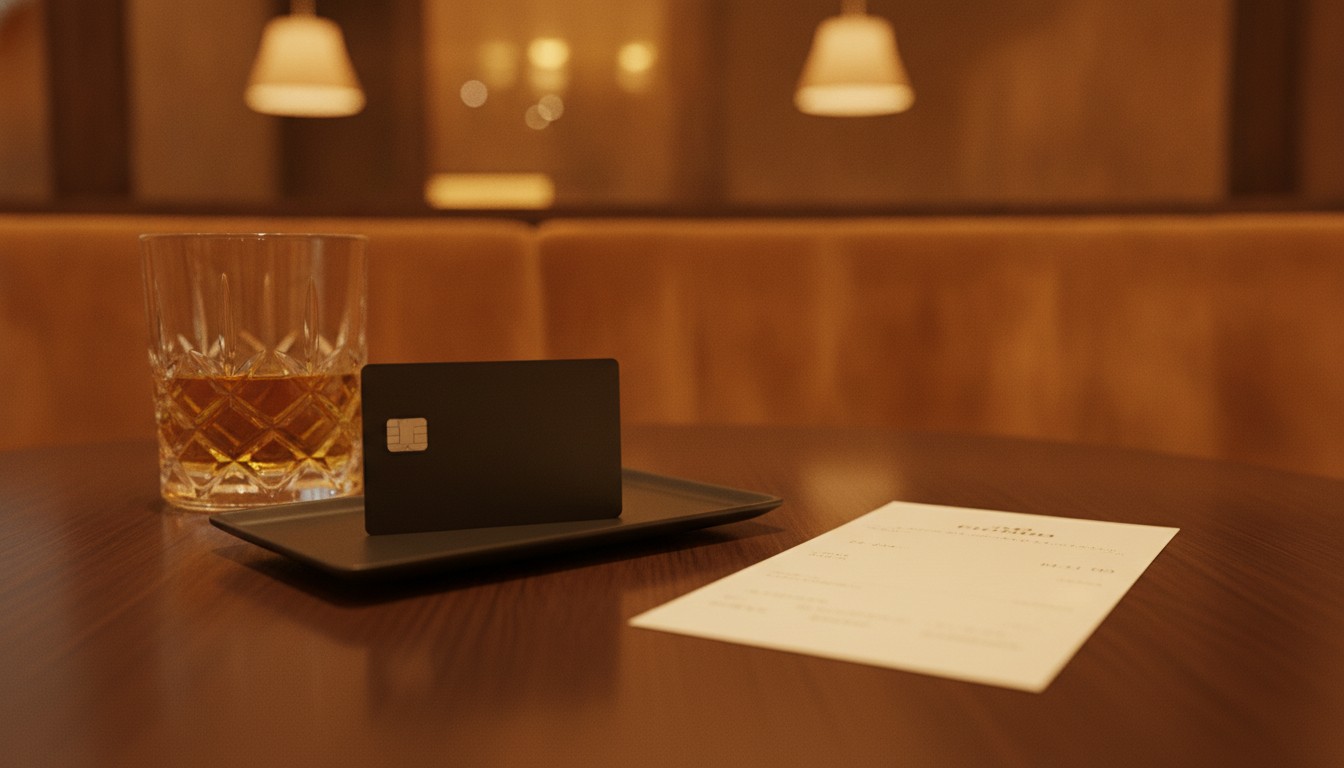
Here's the setup. You sit down, you have a couple of drinks, you enjoy the night. The menu said one price. Then the check arrives, or the staff brings the card terminal over, and suddenly there's an extra 8 to 10 percent tacked on "because you're paying by card." Cash would have been the menu price. Card costs more. Nobody mentioned this when you walked in.
That gap is the trap. It's usually small enough that a tired traveler just pays it and moves on, and big enough that it adds up nicely for the venue across a busy night.
Why does it happen? Card processors do charge merchants a fee to accept cards, usually a couple of percent. A legitimate business absorbs that as a cost of doing business, the same way a restaurant back home doesn't charge you extra for tapping your card. Passing it to the customer as a surprise surcharge isn't a normal practice, and it actually breaks the merchant rules that Visa and Mastercard require their businesses to follow. Card networks generally don't allow a merchant to inflate the price just because you chose plastic.
So when a venue does it anyway, and doesn't tell you first, treat it as a red flag. A place that hides a 10 percent markup in the payment step is a place that's comfortable being less than straight with you. Ask yourself what else on that menu wasn't quite what it seemed.
Why it targets foreign visitors
This one isn't an accident. The surcharge trick works best on people who won't push back, and that's often tourists.
A visitor usually can't read the fine print on a Japanese menu. A visitor doesn't know the local norm, so "card fee" sounds vaguely plausible, like a tax or a service charge. A visitor is unlikely to argue in a language they don't speak, at 1 a.m., over the equivalent of a few dollars. And a visitor almost never comes back to complain. From a shady operator's point of view, foreign guests are the ideal target.
It often starts on the street. A tout or a "free information desk" (無料案内所) offers to walk you to a great bar. What they're really doing is steering you toward whichever venue pays them a commission, and those are rarely the ones with transparent pricing. The friendly guy who found you outside the station is not on your side.
How to protect yourself
The good news is that one question defuses almost all of this. Ask it before you order anything, ideally before you even sit down.
- "Is the price the same for card and cash?" Ask it plainly. A legitimate venue answers yes without hesitation. Hemming, hedging, or a sudden "well, card is a little more" tells you everything.
- Get the total confirmed up front. Know what a set costs, what drinks cost, and what the final number will look like before you commit. Reputable places are happy to spell it out.
- Skip the touts and free-info desks. If someone approached you on the street to bring you somewhere, that somewhere is chosen for their benefit, not yours. Walk on.
- Favor venues that publish all-inclusive pricing. If a place lists a clear per-person set price with tax and service already included, and you can see it before you arrive, you're already in safer territory.
- Watch the payment step. When the terminal comes out, glance at the amount. If it's higher than expected, ask why then and there, not after you've tapped.
None of this requires Japanese or confrontation. It just requires asking first.
LUXE's promise: same price, cash or card or crypto
At LUXE, there is no card surcharge. Ever. The price is identical whether you pay with cash, a card, or crypto. What you see is what you pay.
We take Japanese yen in cash, Visa, Mastercard, AMEX and JCB, WeChat Pay and Alipay, and stablecoins USDT and USDC through our BluePay partner. Pick whichever is easiest for you. The number doesn't move.
And the pricing is all-inclusive, tax and service already in the figure. A first-time visit on the Main Floor is ¥7,000 per person for a 40-minute set when you book online, our new-guest rate. A regular Main Floor set is ¥13,000. The VIP Room is ¥20,000 first-time and ¥28,000 after that. If you'd like to nominate a specific cast member, that's ¥4,000–¥5,000 per cast per set. There are only two seating options to keep it simple, the Main Floor and the private VIP Room. No tipping, because Japan doesn't do tipping. No surprise line on the check.
We're a licensed venue in Kabukicho, two minutes from Shinjuku Station's East Exit, open 7 p.m. to 1 a.m. daily, with cast who speak English, Japanese, Chinese, and Korean. The whole point is that you can relax without doing math in your head. Our guests seem to appreciate that. LUXE holds a 4.8-star rating across 310-plus Google reviews.
Come see the difference
A good night out shouldn't end with a bill that surprises you. Check the pricing page so you know the exact number before you arrive, then book a table to lock in the first-time rate. If you want to go deeper on how the street-tout and free-info-desk game works, our guide to transparent booking versus the free-info-desk trap covers it. Either way, ask the card question everywhere you go. It's the fastest way to tell a straight venue from a trap.