Tokyo vs Seoul vs Okinawa in Late September 2026 — An Honest Comparison for Travelers Who Care About the Night
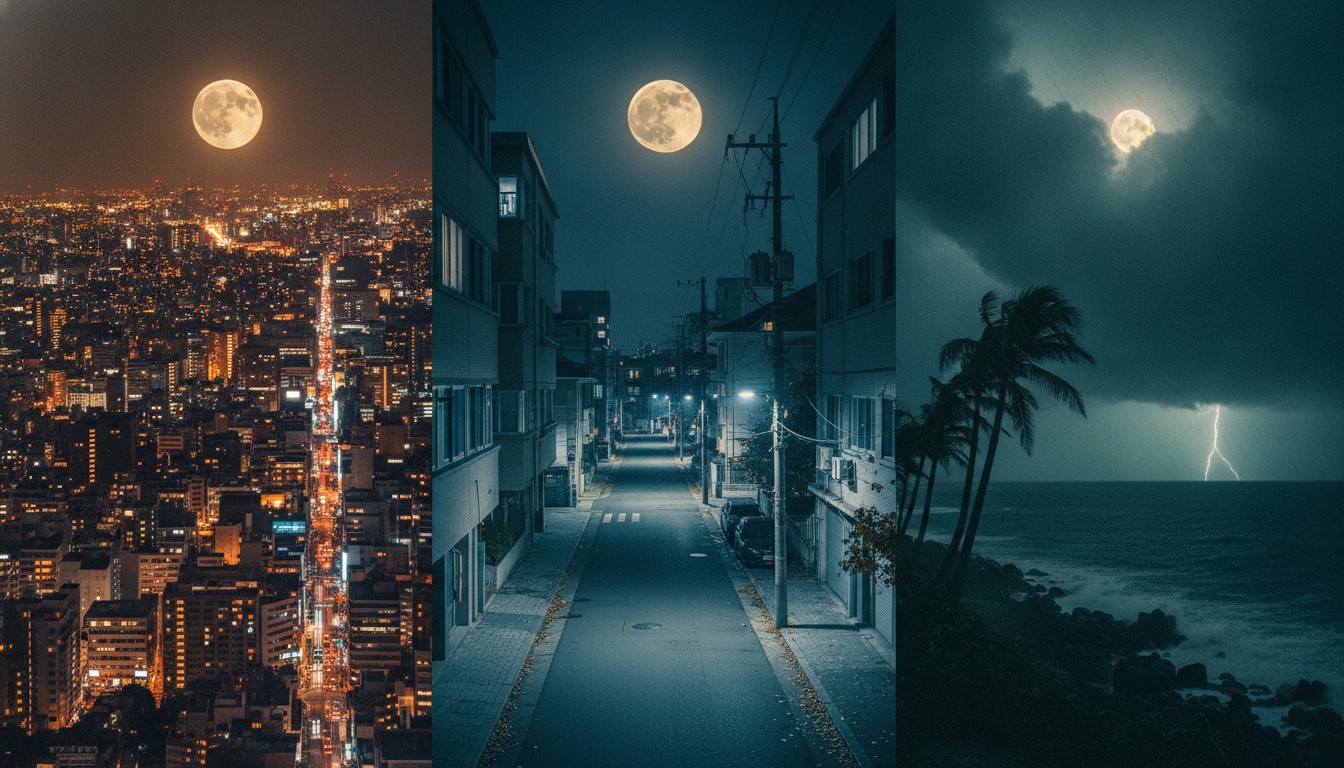
Every comparison ranks the daytime. This one ranks the night.
Search "Tokyo vs Seoul vs Okinawa" and you'll find a hundred articles comparing flight prices, temple counts, and shopping districts. All useful — and all silent about the thing that decides whether a trip feels alive or flat for a certain kind of traveler: what the city is like after dark on the specific dates you'll be there.
Late September 2026 is a fascinating test case, because three East Asian holiday calendars collide in a single ten-day stretch. Japan runs its first five-day Silver Week in eleven years (September 19–23). Korea celebrates Chuseok (September 24–26), its most important family holiday of the year. And the Mid-Autumn Festival (September 25) sends millions of travelers from Taiwan, Hong Kong, and mainland China abroad — a huge share of them choosing between exactly these three destinations.
Where you land inside that collision matters more than any ranking of attractions. Here's the honest breakdown.
Seoul: arriving in the middle of someone else's family reunion
Chuseok is to Korea what Thanksgiving is to America and Lunar New Year is to China — the one holiday when the entire country goes home. In 2026 it falls on September 24–26, squarely across the late-September travel window.
What that means on the ground: Seoul empties of Seoulites. Neighborhood restaurants, markets, and independent shops close for the holiday; intercity roads and rail hit their annual peak as the city returns to its hometowns. The tourist cores of Myeongdong and Hongdae stay open, but you get a strangely hollowed-out version of the city — and Seoul's nightlife, at its best, runs on local energy. The bars of Euljiro and the clubs of Itaewon are great because of the Koreans in them, not the tourists.
Seoul remains a terrific city break — short flights, elite shopping, K-culture at the source. But booking Seoul for its nights during Chuseok is like visiting New Orleans the week everyone's out of town. Wrong dates, wrong city.
Okinawa: beautiful, shallow, and hostage to the weather map
Okinawa's late-September problem is simpler: September sits at the peak of typhoon season. Statistically, August and September see the most typhoon approaches of the year. Book a late-September beach week and your entire itinerary hangs on a weather chart that only resolves a few days before departure. Win the coin flip and it's paradise; lose it and you're watching horizontal rain from a resort lobby while your return flight gets shuffled.
And the nights? Okinawa's evening scene — the izakaya of Kokusai-dori, the bars of American Village — is pleasant, relaxed, and shallow by design. It's a place for one drink after dinner, not a place where the night itself is the destination. If the night is a major reason you travel, Okinawa was never really in this race.
Tokyo: the crowds just left, and the city doesn't need a holiday to stay up late
Now Tokyo. Silver Week (September 19–23) is Japan's own domestic travel tsunami — the first five-day September holiday in eleven years, with hotels, bullet trains, and restaurants running at annual peaks. Sounds like a reason to avoid Japan? Read the dates again: it ends September 23. On the 24th, the entire country goes back to work.
Arrive on or after September 24–25 and you inherit the best version of the deal: hotel prices sliding down from their Silver Week peak, trains back to their weekday rhythm, restaurant reservations back to normal difficulty — while the city's night economy runs at full speed, because Tokyo's nightlife has never depended on holidays. It runs every week of the year on the sheer size of the city itself.
The travel data backs the instinct: Japan logged a record July with visitor numbers at all-time highs from seventeen different markets. The travelers who specifically pick the post-Silver-Week window are the ones who did their homework.
There's also simply more happening. That last week of September, Shinjuku alone offers the Tokyo Curry Expo (September 11–October 7) near Okubo Park, a Vietnamese bánh mì festival (September 26–27), and the rooftop Water Terrace beer garden at Tokyu Kabukicho Tower, open through the end of December. Free or cheap, all of them, and all within a ten-minute walk of the best evening in the city.
The late-September Tokyo evening plan, night by night
Say you're in for four nights, roughly September 25–28. Days are yours; here's how the nights slot together.
Night one — land soft. Check in, drop the bags, eat near Shinjuku's east exit, and walk the perimeter of Kabukicho to get your bearings. If it's the 25th, look up: the Mid-Autumn full moon over Kabukicho Tower is its own event. Save the real itinerary for tomorrow.
Night two (Saturday the 26th) — the main event. Graze the bánh mì festival and the Curry Expo before dark, then commit to a proper night out. A Saturday in Shinjuku is busy in the ordinary, energizing way — not the holiday crush of a week earlier. If you're planning a premium venue experience, read our complete Shinjuku nightlife guide first and book online before you fly — more on why below.
Night three (Sunday the 27th) — the connoisseur's pick. Sunday nights in Shinjuku are quieter, and that's precisely their value: unhurried service, no time pressure, real conversation. If quality matters more to you than volume, this is the best night of the four. We break down the whole off-peak logic in our Silver Week × Mid-Autumn planner.
Night four — book an afternoon flight out. One last morning loop, and avoid the 8–9 a.m. Yamanote crush with your luggage.
The one real hazard of a Tokyo night — and the boring way to eliminate it
Tokyo's nightlife has exactly one genuine trap, and it isn't price — it's unpublished price. Kabukicho's street touts and "free information centers" have been the subject of forum warnings for a decade, and enforcement crackdowns for just as long: follow a stranger to a venue, and your bill is decided after you sit down. The fix is almost boringly simple: only visit venues with published pricing and online booking. We've written the full playbook in how to book Kabukicho safely without a tout — ten minutes of reading that de-risks the entire trip.
At LUXE Shinjuku, the full price list is public: entry plans from ¥7,000, drinks included, no hidden charges, with English and Chinese-speaking staff, a 4.8-star Google rating, and 310+ reviews you can check yourself. Whether ¥7,000 for a premium Kabukicho night is good value is a fair question — we answer it with actual arithmetic in is a ¥7,000 Shinjuku night worth it.
First time at a Japanese premium lounge and unsure how the evening works? The how-to-play guide walks through the entire flow in five minutes, and the FAQ covers dress code, language, and payment.
The booking timeline, working backwards from your first night out
If the comparison above settled it, here's the order of operations — because the late-September window rewards people who book in the right sequence.
Flights first, and soon. Late-September seats into Tokyo are being absorbed from two directions at once: international travelers who spotted the post-Silver-Week dip, and the tail end of Japan's own holiday reshuffling. The fare curve for the September 24–30 arrival window steepens as Silver Week inventory clears. If you're flexible, aim your arrival at September 24 or later — you'll feel the difference in both fares and hotel rates.
Hotels second, dated carefully. The single most expensive mistake of the season is letting your stay straddle September 22–23, the last two nights of Silver Week, when rooms are priced for Japan's domestic peak. Shift the same stay two days later and you can drop a full price tier. Shinjuku hotels are the obvious base for this itinerary — every evening described above starts within a fifteen-minute walk.
Evenings third — but before you fly, not after you land. Restaurants in Tokyo can usually absorb a walk-in. The premium end of Kabukicho cannot, and shouldn't: the venues worth your time hold tables for confirmed bookings, and arriving reservation-less is precisely how travelers end up following a street tout somewhere with unpublished prices. Ten minutes of online booking from home removes the entire failure mode.
And if you're already thinking further ahead: Tokyo's autumn-foliage peak is forecast for the end of November this year, and the same off-peak logic will apply around those dates. Flights for late-November viewing trips are historically cheapest booked two to three months out — which means the smart money books that trip in September, too.
The verdict, in three lines
- Seoul, late September: mid-Chuseok — locals gone, shops shuttered, transport jammed. Great city, wrong week.
- Okinawa, late September: a coin flip with typhoon season, and shallow nights even when you win.
- Tokyo, late September: holiday crowds just left, prices easing, two free food festivals in the window, and a night scene that runs at full power every week of the year. If the night matters to you, this isn't close.
Claim the window
Flights into Tokyo for late September are being absorbed week by week — you're not the only traveler who has noticed what the calendar is offering. Once the flight and hotel are locked, lock the nights too: in Shinjuku, the difference between "booked before departure" and "we'll figure it out there" is the difference between a great story and a cautionary one.
Book LUXE Shinjuku online — English and Chinese-speaking staff, transparent pricing from ¥7,000, and late-September tables open for reservation now. Let the calendar do the crowd control; you just show up.